Cybersecurity Auditing
The third line of defence in cybersecurity. Build the skills to plan, scope, conduct and report cybersecurity audit assignments with confidence.

Our institutional partners








Module purpose
This module provides students with the skills and understanding needed to build an annual audit programme, develop audit plans for specific assignments, conduct cybersecurity audit activities and produce the resulting report.
Third line of defence
Use auditing to give assurance to decision-makers on the existence and efficiency of cybersecurity controls.
Audit programme and plan
Learn to structure annual audit activities and develop specific audit plans aligned with business and technical needs.
Findings and recommendations
Conduct fieldwork, document audit activities and produce reports that inform stakeholders on maturity, effectiveness and outcomes.
Learning outcomes
Participants learn to implement audit activities as part of an assurance process, from scoping and criteria selection to audit reporting.
By the end of the module
Students will be able to plan, develop and conduct a full audit assignment on cybersecurity activities, with the aim of informing stakeholders and aligning audit work with business requirements and good practices.
Practical audit capabilities
The module emphasizes practical audit work and the ability to translate evidence into findings and recommendations.
Assignment scoping
Develop the scoping of an audit assignment and select suitable criteria.
Criteria and practices
Align with usual audit practices, including the Certificate in IT auditing.
Fieldwork and reporting
Develop audit fieldwork and produce a report with findings and recommendations.
12-week programme
The delivery path moves from audit purpose and need to scoping, planning, fieldwork, documentation, reporting and complete assignment review.
Week 1: Audit Purpose
Clarify the role and value of audit activities in cybersecurity assurance.
Week 2: The Need for Audit Activities
Understand why audit activities matter for control assurance and decision-making.
Week 3: Audit Scoping
Define assignment boundaries, objectives and criteria.
Week 4: Audit Plan
Translate audit objectives into a practical plan for execution.
Week 5: Audit Activity
Conduct the assignment and gather relevant evidence.
Week 6: Documenting Audit Activities
Capture work performed, evidence used and conclusions reached.
Week 7: Audit Report
Produce clear findings and recommendations for stakeholders.
Week 8: Planning Overall Audit Activities
Build a broader view of recurring and annual audit activities.
Week 9: Auditing Specific Domains
Apply the audit approach to selected cybersecurity domains.
Week 10: Student Deliverables
Presentation of selected students' deliverables.
Week 11: Class Business Cases
Work through business cases to connect audit practices to real situations.
Week 12: Complete Assignment Overview
Review the full lifecycle of a complete cybersecurity audit assignment.
Cybersecurity Auditing
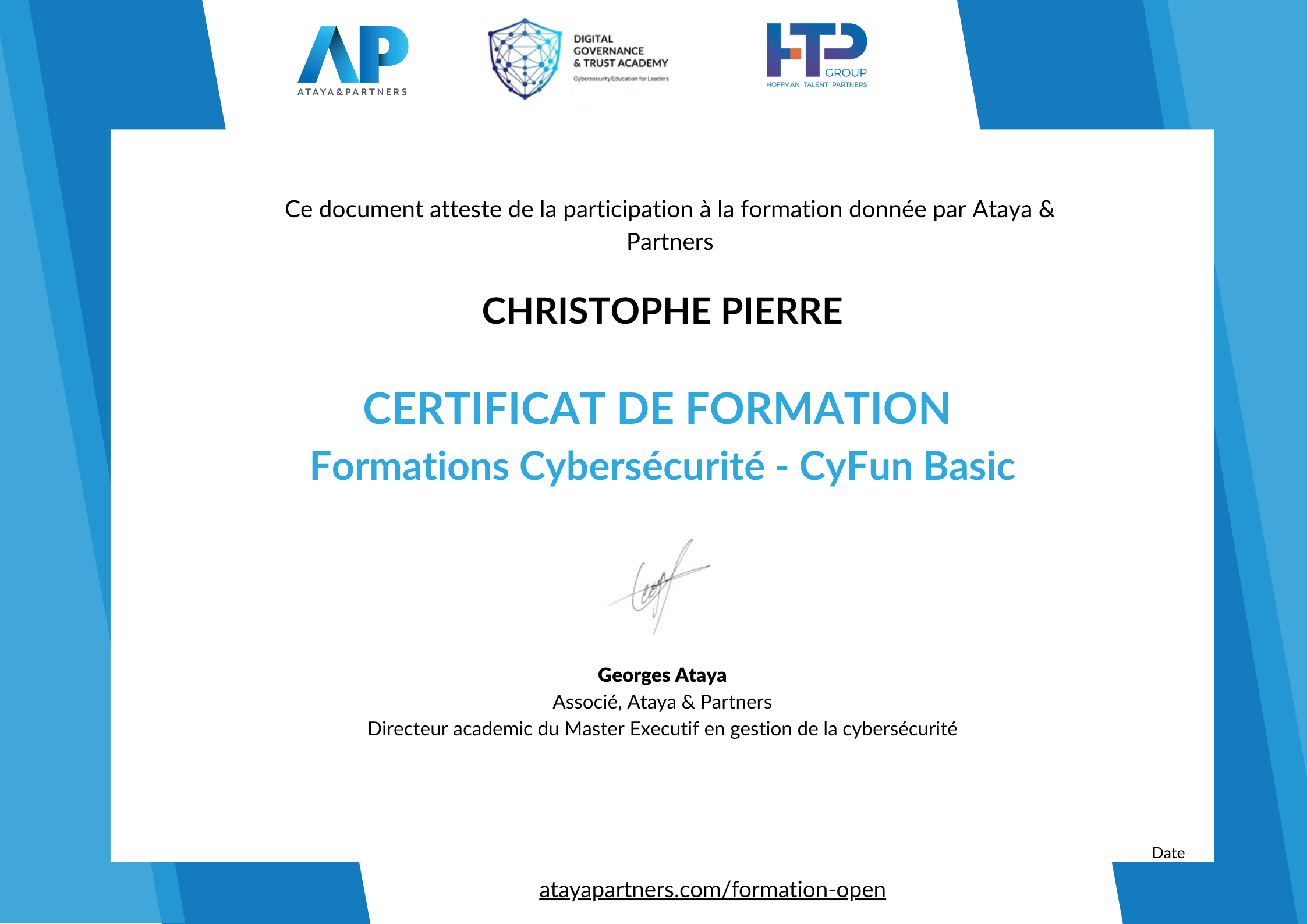
The module gives 5 ECTS and concludes with a certificate distributed at the end of the training.
Request registration detailsCertificate and credits
Your trainers
Our trainers are active cybersecurity practitioners with deep experience in cybersecurity governance, assurance, risk management and executive-level cybersecurity education.

Georges Ataya
Georges Ataya is one of Belgium's foremost authorities in cybersecurity governance and risk management. Professor and Academic Director at Solvay Brussels School of Economics & Management, he co-founded the Cybersecurity Coalition Belgium and serves as its Vice-Chair. With 45 years of experience advising organisations across the public and private sectors, he brings both academic rigour and deep practitioner insight to every session.

Taco Mulder
Taco Mulder is CISO at Belgium's Federal Public Service Policy & Support (BOSA) and a recognised voice in public sector cybersecurity. A former CISO at Brussels public hospitals, he coordinates the Cybersecurity in Healthcare Focus Group at the Cybersecurity Coalition and is a topic leader in Information Security Management at Solvay Brussels School. He is also a mentor and coach for the Women4Cyber programme.

Kian Bayat
Kian Bayat is Cybersecurity Stream Lead for Vulnerability Management at Federale Assurance, and previously held senior cyber risk, business continuity and crisis management roles at Nagelmackers Bank and ING Belgium. With over 20 years of experience spanning IT risk and security leadership, programme and project management, infrastructure and software development, he combines deep technical expertise with strong stakeholder engagement at executive and board level. He is an accredited APMG CRIS trainer, an ISACA Belgium board member, and a member of the Cyber Security Coalition Cyber Awards Task Force.

Tania Postil
Tania Postil is a senior cybersecurity and GRC consultant, currently strengthening the IT risk and security team at Banque Degroof Petercam on DORA compliance, IT general controls and security awareness. Certified CISA and ISO 27001 Lead Implementer, she has delivered CISO-as-a-service, internal audit and operational risk management engagements for organisations including Keytrade Bank, Generali Belgium and AXA Banque Europe. An accredited speaker and trainer, she serves as Vice-President of the ISACA Belgium chapter.
Target audience
The module is designed for professionals involved in audit, cybersecurity risk, compliance, implementation, advisory and investigation activities.
Discuss the Cybersecurity Auditing module
Request the syllabus, delivery details or registration information for the 2026-2027 edition.
Register interest Request syllabus